The complete wellington boot fit guide
Wellington boots are one of the hardest pieces of clothing to fit correctly.
Since they often lack fastening mechanisms around the foot, like laces and buckles, it’s extra important that you can find a pair with minimal loose spaces. On the other hand, if they’re too tight, you unleash numerous other potential issues.
From constricted circulation to rubbing and blisters, there are a lot of downsides associated with getting the sizing process wrong.
If you’ve spent time wondering - how should wellies fit? - then this guide should answer the main questions and help you find your perfect rain boots.
How to get the perfect wellington boot size
Compared to other types of footwear, wellington boots are relatively unforgiving when it comes to sizing.
The three main factors behind this difficulty are the lack of fastening mechanisms, the rigidity of most wellie materials (whether natural rubber or synthetic) and the fact that the boots need to be pulled on over your foot and ankle.
To get the sizing right, you’ll need to measure your feet - there are two main ways of doing this.
To measure the length of your foot, you can either stand on a ruler or tape measure, or stand on a piece of paper and trace around your foot, and then measure the resultant drawing.
There will likely be a size discrepancy between your two feet, but pick the larger of the two measurements. You can then use a chart to translate that measurement into an EU, UK or US size.
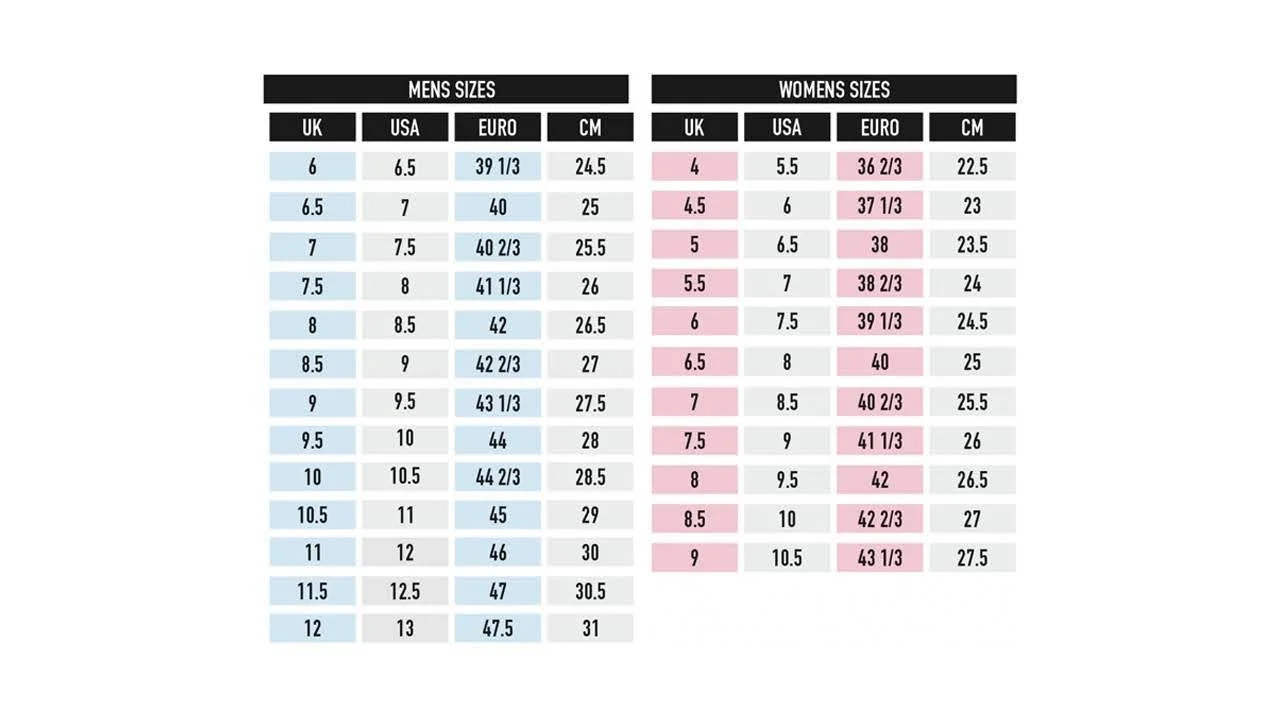
You’ll also likely want to measure the circumference of your calf. To do this, take a flexible tape measure and wrap it around the widest point of your calf; if you don’t have a flexible tape measure, then wrap a piece of string around your calf instead, and you can measure it when you straighten it out.
If you can actually try the boots on in person, you’ll get a much better idea as to whether they fit you properly than you would just measuring your feet. You don’t want your toes to touch the end of the boot when you’re standing up - if they do, you’ll likely find that you end up bashing and bruising them as you walk around.
Different boots will have different widths and accommodate different kinds of arches and insteps, and it’s best to test these aspects in person.
Of course, you can also get a good idea by checking forums for posts and reviews by people with similar foot shapes to yours.
If you’re going to be wearing the boots during winter for longer periods of time, especially if you have to remain sedentary for work, you may want to size up a little to accommodate thicker socks.
It’s important to take all of these measurements at the end of the day, when your feet are slightly more swollen from walking around compared to when you’ve just woken up.
Should you size-up in wellies?
A lot of prospective buyers will be wondering, should you size-up in wellies? The answer depends on the manufacturer, your intended use, and the time of year you’ll be using the wellington boot.
You’ll often find that different manufacturers have slightly different approaches to fit. Some, such as Hunter, tend to run a little smaller, and it’s worth sizing up in some models. Others, such as Le Chameau, tend to fit truer to size, with thick socks already accounted for in their sizing.
If you’re a half size and the boots you’re after only come in whole sizes, or if one of your feet is larger than the other, then with wellies it’s generally better to size up rather than down. You can’t stretch the wellie to give you any more space, but you can fill up a little excess space with a custom footbed or some thicker socks.
If you’re consistently going to be wearing the boots in exceptionally cold weather, then you may want to size up to fit a second pair of socks. You can buy boots that already feature impressive insulation, but with warm socks, you can further adapt to the conditions you’re in.
Is it normal for wellies to hurt when you first wear them?
Because natural rubber, PVC and other common wellie materials don’t really stretch, you shouldn’t expect wellies to ‘wear in’ like a leather shoe or boot might. As a result, it’s best to avoid a fit that doesn’t hurt from the get-go, as that pain likely won’t go away.
What you may find is that the lining or foot bed can mould to match the shape of your foot. This will be especially applicable with boots that have thicker insoles; a good example of these is Muck Boots, which come with a memory foam topper that conforms to the shape of your foot over time.
If you’re not going to need to wear your wellies much - just for the occasional garden chore, for example - then an uncomfortable fit won’t be so problematic. If, however, you need to wear them day in, day out for work, you’ll want to choose a model that doesn’t hurt when you first wear it.
Upgrading your insole and socks is often the best bet if you’re looking to reduce pain, and you think that the boots you have are otherwise a good fit for your feet.
How can I avoid blisters when wearing new wellies?
Avoiding blisters is often most effectively achieved when you’re first sizing up your new wellies. Blisters tend to occur when you have spots that rub persistently over time, often at your heel or on the sides of your feet, and getting the sizing right can prevent that rubbing from occurring in the first place.
There are some additional tricks to avoiding blisters, though. One of these is to use specific socks. Wool and other technical fabrics tend to wick moisture away better than cotton, which can maintain a better barrier between boot and skin, and reduce rubbing.
Some people also find that wearing a double layer of thin socks can pass the friction on to the layer between the socks, avoiding excessive rubbing on your skin.
You can also proactively apply blister plasters from brands like Compeed, to protect your skin before it blisters in known trouble areas. Likewise, you can apply anti-blister salves and balms to high-friction areas, to act as a slight lubricant and avoid blister-inducing friction.
It’s worth testing a few of these approaches, especially if you’re particularly prone to getting blisters, to see if they work for you.
Is it better to wear thick socks with wellies?
Thick socks do tend to be better than thin socks when you’re wearing wellies. They help to fill out some of the extra space, reduce friction and blisters, and can provide useful cushioning and insulation.
If you’re getting wellies that are already insulated, then extra-thick socks could end up being too hot. If you do want to wear very thick socks, you may need to size up a half or a full size to accommodate the extra space the socks will take up.
Of course, ideally, you’ll be able to try the boots on with the socks you’ll regularly wear.
Conclusion
Getting wellies that fit pretty much straight out of the box is really important. They won’t stretch much, and without laces or other fastening mechanisms around the foot, you won’t be able to take up much excess space either.
Make sure that you measure your feet carefully, research how specific brands fit, and, ideally, try the boots on to get a better feel. If you suffer from blisters or any initial issues, then be sure to use methods like double socks, blister plasters and anti-blister salves to prevent any further problems.